
Plate II.
In plain words
Five products. Three go on the skin, two you swallow.
Three of these are cosmetics you apply and two are taken by mouth. None of them is a medicine.
The wall this page is about is the outer layer of the skin, the part that holds water in and keeps irritants out, and everything here is aimed at keeping it supplied rather than at treating a condition.
Aquatopic Stay Hydrated
Cream, 500 g and 200 g
For skin that is very dry, tight and flaky. A rich cream with the AQUAXYL complex, shea, cocoa and mango butters and glycerin.
Acnexa Clearing and Matting Face Wash
Rinse-off gel, 100 ml
For skin that is oily and shiny by the middle of the day. Salicylic acid at 1.5 per cent with zinc PCA, centella and lemongrass. It goes on wet skin and rinses off.
Acnexa Ultra-Light Moisturising Gel
Leave-on gel, 50 ml
A light moisturiser for oily skin that still needs water. Niacinamide at 3 per cent with phytosqualane, tea tree and centella.
Acnexa
Capsule, 30
Vitamins and minerals with centella, green tea, wheat germ and MSM, for someone already using the topicals rather than instead of them.
Maxitopic
Oro-dispersible sachet, 30
Two named bacterial strains, four billion live cells a sachet at the end of shelf life. It dissolves in the mouth and needs no water.
How many, and when
How often to use the three topicals, and how many capsules and sachets a day, is printed on each carton and is not yet on this page. It will be, once we have checked it against the approved artwork.
What these will not do
The wash is a wash. The gel is a moisturiser. Neither is an acne treatment.
Acne is a medical condition, and a cosmetic sold as treating one would be an unlicensed medicine. That is why the entries below say so in those words. If acne is painful, leaving marks, or simply not shifting, the person who can treat it is a doctor.
What these do is the thing on the label: clean oily skin, reduce visible shine, and keep the barrier supplied with water while something else does the treating.
00 / The skin barrier
One wall.
Two routes to it.
The stratum corneum is a wall of cells and lipid. It holds water in and keeps the world out. When it is spent, skin dries, tightens, flakes and reacts, and everything applied to it stings. Five products sit in this segment. Three work on the wall. Two work on what the body brings to it.
01 / What wears it down
A barrier is spent, not broken.
Water leaves skin continuously, and the rate it leaves at is the measure of whether the wall is still intact.
Cold air, hard water, surfactants, heat and time all raise it. So do treatments. Retinoids and acids work by turning the wall over faster than it rebuilds, and the dryness that follows is not a side effect of the treatment so much as the treatment itself, seen from the outside.
That is why this segment exists in a portfolio that otherwise avoids symptom work. The barrier is the one place where what we sell and what a dermatologist prescribes are aimed at the same tissue at the same time.
02 / On the skin
Three formulations, one wall.
A cosmetic may say what it does to the surface of the skin. It may not say what it does to a disease. Everything below is a function claim, written to the standard the European Commission set for cosmetic claims: legal compliance, truthfulness, evidential support, honesty, fairness, and leaving the reader able to decide.
01

Aquatopic Stay Hydrated
Cream · 500 g and 200 g
An intensely moisturising cream for very dry skin. It carries the AQUAXYL complex of xylitol, xylitylglucoside and anhydroxylitol, with shea, cocoa and mango butters, glycerin and phytosqualane. It helps reduce dryness and flaking and helps keep skin soft, smooth and supple. The finished product is skin compatibility tested.
Not claimed: suitable for sensitive skin. That wording implies a tolerance study result. The honest form is the one above.
02
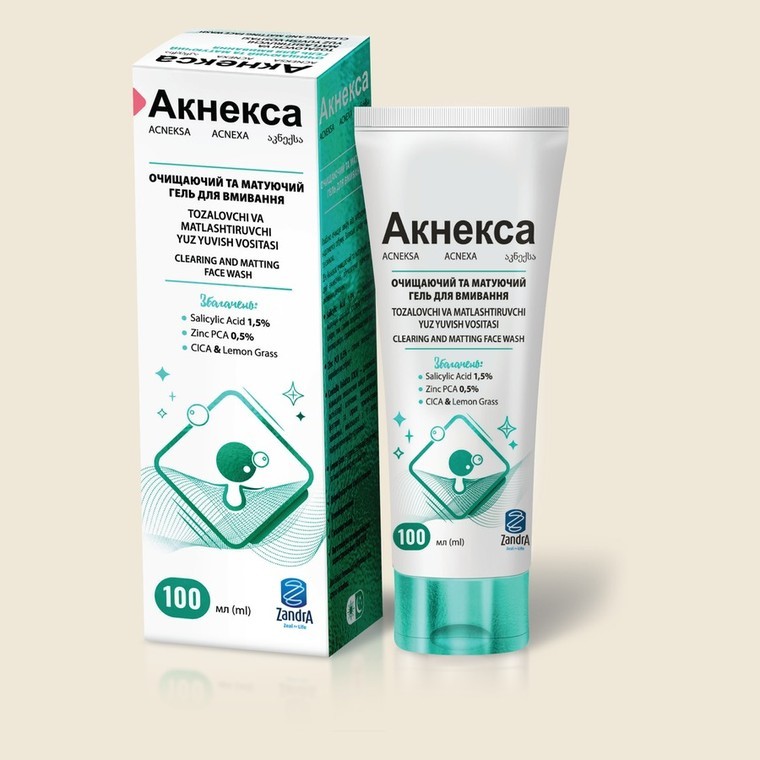
Acnexa Clearing and Matting Face Wash
Rinse-off gel · 100 ml
A cleanser for oily and combination skin, with salicylic acid at 1.5%, zinc PCA at 0.5%, Centella asiatica and lemongrass. It cleanses, gently removes dead surface cells and helps reduce visible shine.
Salicylic acid is permitted in a rinse-off product of this type up to 2.0%, and this is below it. Not to be used for children under three years of age.
Not claimed: that it treats acne. Acne is a classified condition, and a cosmetic presented as treating one becomes an unauthorised medicine. This is a wash.
03
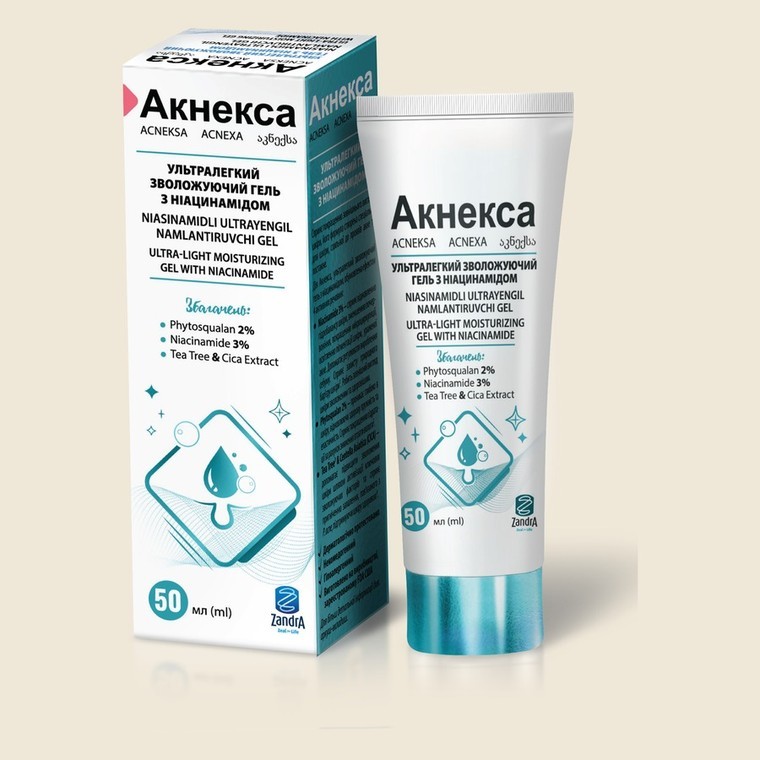
Acnexa Ultra-Light Moisturising Gel
Leave-on gel · 50 ml
A light gel with niacinamide at 3%, phytosqualane at 2%, tea tree and Centella asiatica. It helps maintain skin hydration and supports the skin barrier function, and leaves skin soft and comfortable. It is dermatologically tested and formulated to be non-comedogenic.
Coming off the carton: hypoallergenic, and the reference to a United States FDA registered facility. Neither survives European scrutiny. A facility registration is an administrative record, not an approval.
03 / From inside
What the skin is built out of.
Two products in this segment are food supplements, and supplements are governed by a much narrower rule than cosmetics.
A nutrient may carry a claim only where an authorised sentence exists for it and the product supplies at least 15% of the European reference value for that nutrient. Everything else stays unsaid, however good the ingredient.
04

Acnexa
Capsule · 30
Vitamins and minerals with Centella asiatica, green tea extract, wheat germ and MSM.
One authorised sentence fits this formulation, the zinc one: zinc contributes to the maintenance of normal skin. Centella, wheat germ and MSM carry no authorised European claim, so we make none for them. Green tea carries a restriction of its own, because European law caps EGCG in food supplements and requires specific warnings on the pack.
A food supplement is not a substitute for a varied and balanced diet and a healthy lifestyle.
05

Maxitopic
Oro-dispersible sachet · 30
Each sachet provides at least four billion live cells of Lactobacillus paracasei GMNL-133 and Lactobacillus fermentum GM-090 at the end of shelf life, in an orange-flavoured powder that dissolves in the mouth.
We cannot call this a probiotic.
The Commission treats the word itself as an unauthorised health claim, and no gut, immunity or skin benefit has ever been authorised for these or any other strains. Several member states now tolerate the word. The Commission has not moved.
So the product is described by what is in it and by how much, and nothing further.
05 / What is in them
All five, in full.
In this formulation the botanicals carry the work and the nutrients support them, which is why most of the reference value column below sits under 100%. That is a formulation choice rather than an oversight, and printing the column is how you can tell which it is.
Acnexa capsule, one capsule
Nutrient and form
In ours
Of reference value
Legal minimum
Centella asiatica, aerial parts, dry extract
120 mg
no NRV
no minimum
Magnesium, as bisglycinate
75 mg
20%
56.25 mg
Camellia sinensis leaf, decaffeinated dry extract
50 mg
no NRV
no minimum
Methylsulfonylmethane
50 mg
no NRV
no minimum
Vitamin C, as coated ascorbic acid
32 mg
40%
12 mg
Triticum aestivum germ, dry extract
30 mg
no NRV
no minimum
Zinc, as bisglycinate
6.5 mg
65%
1.5 mg
Vitamin B3, as niacin
5.5 mg
34%
2.4 mg
Vitamin E, as D-alpha tocopheryl acetate
5 mg
42%
1.8 mg
Vitamin B6, as pyridoxine hydrochloride
0.95 mg
68%
0.21 mg
Vitamin A, as beta-carotene
420 mcg RE
53%
120 mcg
Vitamin D3, vegetarian stabilised
7.5 mcg
150%
0.75 mcg
Biotin
20 mcg
40%
7.5 mcg
Vitamin A is declared as retinol equivalents and delivered as beta-carotene rather than as preformed retinol. Vitamin D3 is the one nutrient here above the reference value, at 150%, well inside the European upper level of 100 µg.
On the choice of form
Three choices that do not show on the panel.
Percentage of reference value is calculated on the nutrient, not on the compound carrying it and not on which of that compound’s forms was bought. Three of the rows above were decided on grounds the carton has no way of showing.
Zinc, as bisglycinate
The full case for this form is set out on the hair page.
In short: a randomised crossover in 15 adults measured fractional absorption at 49.9% from zinc oxide against about 60% from citrate and gluconate, and a separate crossover placed bisglycinate above gluconate again. Zinc oxide is the cheapest permitted source of zinc in Europe. It is not in this capsule.
Vitamin E, as D-alpha tocopheryl acetate
We buy the natural form, and we are not claiming it does more.
Two vitamin E acetates are sold and they are not interchangeable. The synthetic one, all-rac, is 8 stereoisomers, only 4 of them the 2R forms the liver transport protein prefers. The natural one, RRR, is a single stereoisomer and all of it 2R. Deuterated studies find tissue accumulates about twice as much RRR when both are taken at once. The 2018 review collecting that work states the limit plainly: the 2:1 figure rests on tissue concentration, not on any measured outcome.
Vitamin A, as beta-carotene
This is a safety choice, not an absorption one.
Preformed vitamin A, meaning retinol and its esters, carries an upper limit. It is the form implicated in liver injury at sustained high intake and in harm to a developing foetus. Beta-carotene is converted to retinol only as the body calls for it, so intake does not become retinol one for one.
In a capsule likely to be taken for months by women of childbearing age, that is the form we would rather supply. It is also why the row above reads 420 µg of retinol equivalents and not 420 µg of retinol.
The magnesium is a bisglycinate rather than an oxide, and the argument above applies to it as it does to the zinc.
One detail is still open. 75 mg of elemental magnesium needs upwards of 500 mg of the salt, which is a large fill beside the extracts, so we have asked whether the grade is pure or buffered. A buffered grade contains magnesium oxide.
06 / What is in the other four
Three you apply, one you dissolve.
A cosmetic list tells you the ranking, not the amounts.
Cosmetics are declared under a different regime from supplements: no reference values, no percentages, only an INCI list in descending order of weight down to 1%, below which ingredients may appear in any order.
We print all three lists in full anyway. The ranking is checkable, and the things worth knowing about these products are in it.
Aquatopic Intense Moisturising Cream
Cream, 50 g, 200 g and 500 g
Water, Light Liquid Paraffin, Propylene Glycol, Aloe Barbadensis Leaf Extract, Glycerin, Dimethicone, PEG-100 Stearate and Glyceryl Stearate, Xylitylglucoside and Anhydroxylitol and Xylitol, Cetostearyl Alcohol, Stearic Acid, Butyrospermum Parkii Butter, Theobroma Cacao Seed Butter, Mangifera Indica Seed Butter, Cyclomethicone, Phenoxyethanol and Ethylhexylglycerin, Emulsifying Wax, Polyacrylate-13 and Polyisobutene and Polysorbate 20, Zinc Oxide, Cetyl Alcohol, Xanthan Gum, Disodium EDTA, Phytosqualan, Triethanolamine, Fragrance.
The AQUAXYL complex the page describes is the xylitylglucoside, anhydroxylitol and xylitol group sitting eighth.
This cream also contains zinc oxide, which is worth saying plainly on a site whose home page names zinc oxide as the cheapest permitted source of zinc. That statement is about the zinc in our capsules and tablets. On skin, zinc oxide does a different job.
Acnexa Clearing and Matting Face Wash
Rinse-off gel, 100 ml
Aqua, Sodium Laureth Sulfate, Cocamidopropyl Betaine, Sodium Cocoyl Glycinate, Polyquaternium-39, Propylene Glycol, Glycerin, PEG 7 Glyceryl Cocoate, Sodium Lactate, Salicylic Acid, Triethanolamine, Polyacrylate Crosspolymer 6, Centella Asiatica, Zinc PCA, Cymbopogon Flexuosus, PEG-150 Distearate, Phenoxyethanol, Triethylene Glycol, Fragrance, Tetrasodium EDTA, CI 42090 and CI 19140.
Salicylic acid sits tenth, consistent with the 1.5% in the specification, since anything at or below 1% may be listed in any order after that point.
Salicylic acid is permitted in a rinse-off product of this type up to 2.0%, so this sits inside the limit rather than at it.
Acnexa Ultra-Light Moisturising Gel
Leave-on gel, 50 ml
Aqua, Niacinamide, Squalane, Glycerine, Butylene Glycol Dicaprylate and Dicaprate, Dimethicone, Centella Asiatica Extract, Caprylic Capric Triglyceride, Propylene Glycol, Sodium Polyacrylate, Allantoin, Phenoxyethanol, Triethylene Glycol, Tea Tree Extract, Disodium EDTA, Fragrance, CI 42090 and CI 19140.
Niacinamide is the second ingredient, ahead of everything except water. That is the one thing an INCI list can prove, and it corroborates the 3% in the specification in a way a claim on a carton cannot.
Squalane is the INCI name whether the source is olive or shark. Ours is plant derived, which is what the word phytosqualane means and why the page uses it.
Maxitopic, one sachet
Nutrient and form
In ours
Of reference value
Legal minimum
Lactobacillus paracasei GMNL-133 and Lactobacillus fermentum GM-090, in 105 mg of powder
4 bn cells
no NRV
no minimum
Both organisms are given with their strain designation, not just their species. That is the difference between naming a bacterium and identifying one.
Everything ever shown about a probiotic strain belongs to that strain, not to its species, so a product naming only the species tells you almost nothing.
We cannot use the word probiotic at all, because the Commission treats the word itself as a health claim. The strain codes are the whole of what we are permitted to offer you.
Fragrance and colour
Both Acnexa topicals contain fragrance and two colourants, CI 42090 and CI 19140. Neither is a safety problem and both are permitted.
But this is a range for skin that is oily, reactive and often already being treated with something drying, and fragrance is among the commoner causes of contact reaction in exactly that group. If a formulation is being reviewed, that is the line we would question first.
04 / The line
What is a cream not allowed to say?
A cosmetic acts on the surface. The moment a product is presented as treating a condition it stops being a cosmetic and becomes a medicine nobody has authorised.
Atopic dermatitis and acne are both classified conditions. So the wall can be maintained, the dryness reduced, the shine controlled and the skin left comfortable. The disease cannot be named as something we act on.
If skin is broken, weeping, infected or simply not settling, the person to see is a dermatologist, and the answer may be a prescription rather than anything on this page. One of ours is a prescription. It is marked as the exception everywhere it appears.